First-time visitors often face the same trade-off in Madeira: see several parts of the island, or spend less time moving between them. Build your itinerary around geographic clusters, then confirm how you will reach each place before assigning it to a day. This keeps the plan adaptable without pretending that every route or transport option works on a fixed timetable.

Road ER at Trapiche and Laranjal in Santo António, Funchal, Madeira, May · Ximonic (Simo Räsänen) · Wikimedia Commons · CC BY-SA 4.0
In this guide 6 topics
Choose a pace before choosing stops
Start with the number of full days you have, excluding arrival and departure days if those leave little time to explore. Then divide each day into one main area and one optional addition. If the main outing takes longer than expected, you can drop the extra without dismantling the whole plan.
For a short visit, prioritize fewer areas and allow time for meals, rest, and transfers. With more days, add another geographic cluster rather than packing extra stops into every day. The right balance depends on your transport, mobility needs, and appetite for long outings; no single schedule fits every traveler.
Group places by area, not by checklist
Madeira’s official destination guide describes road transport links between municipalities including Funchal, Santana, Machico, and Câmara de Lobos. That makes these names useful starting points for organizing a rough map, but it does not establish that a particular sightseeing route is convenient on your dates. Treat each area as a planning cluster, then verify the actual connections and destination details before committing.
Begin with the places you most want to visit. Put nearby candidates together only after checking a current map and the route you would use. Avoid adding a distant stop merely because it appears next on a list: the extra transfer may take time away from the experience you came for.

Passageway – Funchal 01 · H. Zell · Wikimedia Commons · CC BY-SA 3.0
Build a flexible day plan
Use this hypothetical structure for any number of days; it is a planning worksheet, not a claim about travel times or a recommended named route:
- Main outing: choose one area or activity that matters most to you.
- Recovery block: leave space for a meal, a break, or a slower return.
- Optional nearby stop: add one only if the route and your energy allow.
- Fallback: name a lower-effort alternative or leave the block open.
For example, a hypothetical three-day plan could reserve one day for Funchal, one for a selected municipality elsewhere on the island, and one for whichever area remains most important after you check transport. This is a framework, not a verified itinerary: choose the specific places only after confirming routes, access, and current operating details.
Choose transport before fixing the sequence
Visit Madeira’s captured transport guide says the island has a coordinated road network connecting municipalities and notes that public transport for visitor sightseeing requires planning. It also describes urban buses, taxis, and ride-hailing services in Funchal. These broad descriptions can help you decide what to investigate, but they do not confirm current schedules, availability, fares, or service conditions. Check the relevant operator or service directly for your dates.
If you plan to rely on public transport, verify that the outbound and return legs fit your day before grouping stops. If a connection does not work, reconsider the cluster or investigate another transport option rather than assuming a convenient transfer. Keep an open block after a demanding outing; a tightly connected schedule leaves little room when a service or plan changes.

Funchal (Madeira, Portugal), Ortsansicht · Dietmar Rabich · Wikimedia Commons · CC BY-SA 4.0
Know what to move or skip
Mark each planned stop as essential, optional, or easy to drop. When time runs short, remove the least important stop in the same area before adding a cross-island transfer. If weather, access, or operating details affect a chosen activity, move it only when another day and the necessary transport both remain available.
Keep one day or part-day flexible if your visit length allows. You can use it for a missed priority, a rest period, or a place that becomes practical after you confirm current conditions. For other examples of how to structure a first visit, see our guides to planning a Da Nang itinerary and organizing a Ninh Binh itinerary; their destinations differ, but their day-planning approach may help you shape your own outline.
Check before you book or set out
Confirm current transport routes and timetables with the relevant provider. Check opening status, ticket requirements, access conditions, and weather-sensitive arrangements for any specific place or activity you add. The destination transport overview is useful background, not confirmation of current operations. This guide uses that overview only for broad network context and makes no claims about exact journey times, prices, or opening hours.
Next, write each day as one main area, a recovery block, and an optional addition. Verify the essential logistics, then leave the rest flexible.
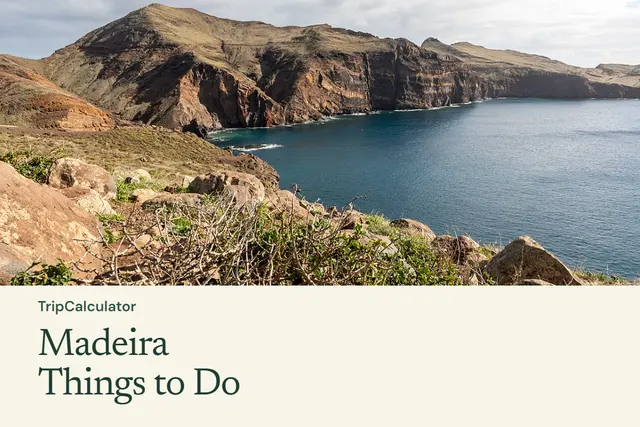
Featured photo: Caniçal (Madeira, Portugal), Ponta de São Lourenço -- 2025 -- 1336.jpg by Dietmar Rabich / CC BY-SA 4.0. Cropped and resized. Editorial title added.