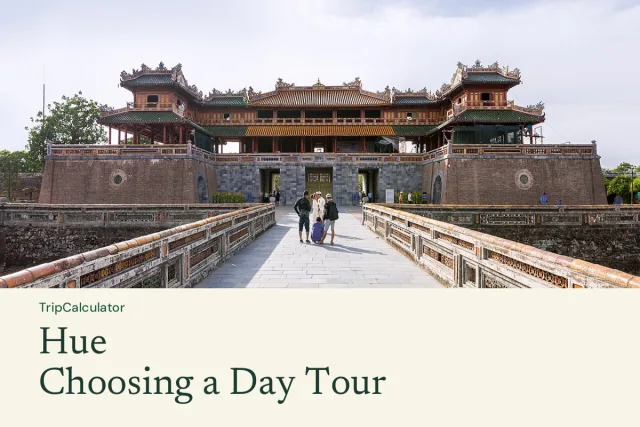
For a first visit to Da Nang, the main decision is how much of each day to spend exploring versus leaving room to rest or change plans. No trip length was specified, so use this guide to build a one-, two-, or multi-day outline from verified places and current transport details, rather than following an invented fixed schedule.
In this guide 5 topics
Set your trip length before choosing stops
Start with the number of full days you have, then mark arrival and departure periods separately. An arrival day may leave little time for sightseeing, while a departure day can be constrained by your onward transport. Do not count either as a full day unless your actual schedule allows it.
Next, sort possible activities into three groups: the places you most want to see, optional additions nearby, and activities you can skip. That order makes trade-offs clear. If a visit takes longer than expected, remove an optional stop instead of rushing through your priority.
Build each day around a small cluster
Use the official Vietnam Tourism overview, Must-visit places in Da Nang, as a starting point for researching possible city and beach interests. The captured page mentions Da Nang’s beach frontage, the Lady Buddha statue, and the illuminated Dragon Bridge, but it does not establish current access, event schedules, or the best order for visiting. Confirm those details before fixing your plan.
For each full day, choose one main area or activity, then add only a nearby secondary stop if current maps and transport information show that the combination is practical. Avoid putting several distant places on one day just because they appear on the same shortlist. The benefit of clustering is fewer cross-city transfers; the trade-off is seeing fewer areas in one day.
If you want to see central sights by cyclo, Da Nang’s tourism site describes a route beginning at the Da Nang Museum of Cham Sculpture and continuing to APEC Park and Bach Dang Street. Treat this as a route idea, not proof that a particular service currently operates or that the route fits your schedule. Check the operator, availability, route, and terms before relying on it.
Choose transport after you choose the route
Write down the places you plan to visit first. Then compare transport options using current maps, pickup details, and provider information. A guided day tour may simplify a multi-stop outing, while arranging transport yourself may suit a shorter route or a day with flexible timing. For help weighing those trade-offs, see how to choose day tours in Da Nang.
Do not assign exact transfer times from a general itinerary template. Traffic, pickup locations, and provider schedules can change what fits. Verify the journey for your travel date, then leave enough unallocated time that one delay does not erase your main activity.
Use this worksheet for each day
Fill in this simple outline before booking activities. It keeps the plan useful without pretending that unverified hours or travel times are fixed.
- Main plan: one place or activity you most want to include.
- Optional addition: a second stop only if location, access, and available time make the pairing workable.
- Rest or meal break: leave a real pause rather than filling every gap.
- Transport check: record the current route, pickup point, and any booking or access conditions you confirm.
- Short-on-time choice: name the optional stop you will drop first.
For example, a hypothetical two-full-day plan could reserve one day for a beach-focused outing and another for a central sightseeing route. Those are planning themes, not a claim that particular beaches or attractions are open, suitable, or easy to combine on your dates. Add named stops only after checking their current details.
Keep a simple plan B
Choose one activity that can move to another day and one optional stop you can remove. If weather, transport, or opening conditions disrupt the original plan, move the flexible activity first and protect the priority you care about most. For a wider system for deciding what to move or drop, use the guide to building a flexible travel itinerary.
Before booking, verify current place names and administrative details, access rules, weather, transport, and any provider terms that affect your chosen route. The destination references here supply starting points, not confirmation of current operations. Once those checks are complete, put confirmed priorities on your calendar and leave optional stops unbooked where flexibility matters.
Featured photo: Da nang dragon bridge.jpg by Thangphan / CC0. Cropped and resized. Editorial title added.